
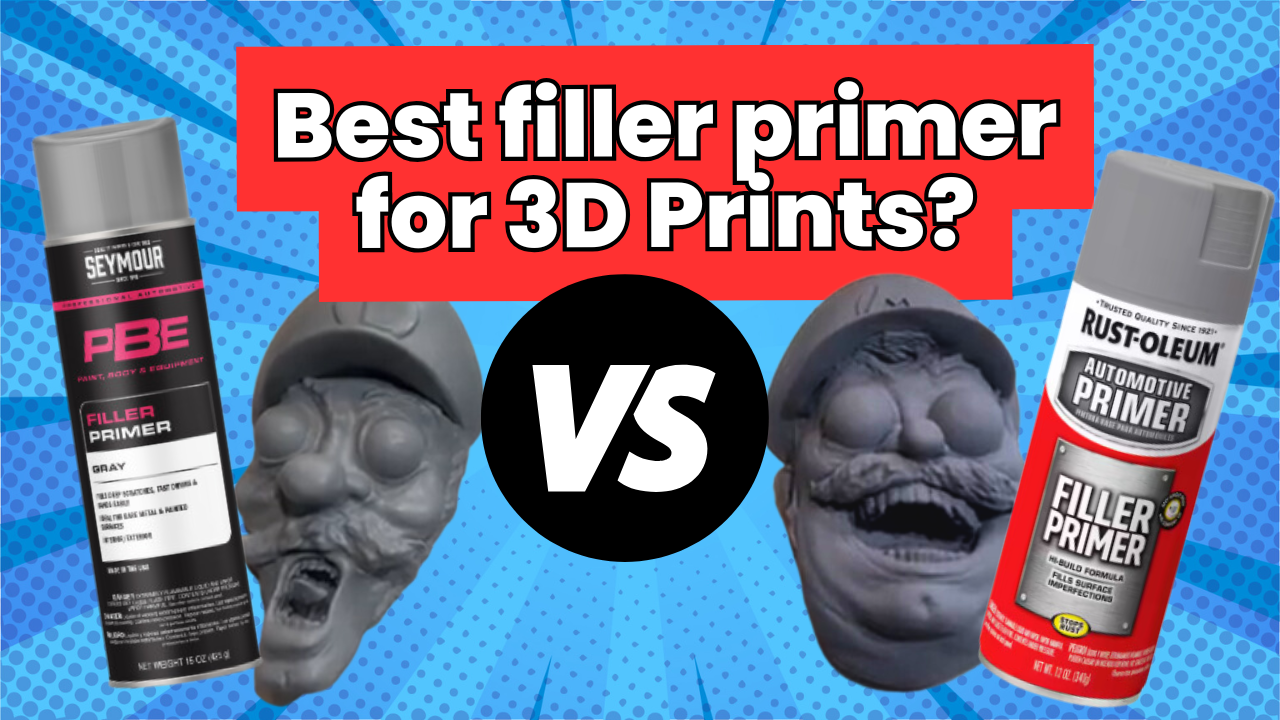
When it comes to cosplay props and 3D prints, one of the biggest challenges is hiding those pesky layer lines. For years, I’ve been on the Rustoleum filler primer train, but recently I decided to test something new: Seymour filler primer. In a battle royale of filler primer for 3D printing!
Spoiler alert: one of them pulled ahead, but there’s a catch.
🎥 Watch the full video comparison here
Why Filler Primer Matters in 3D Printing
If you’ve ever printed a cosplay helmet, prop, or figure, you know that raw prints come off the bed with visible layer lines. Sanding alone can take hours, especially on models with curves and details.
That’s where filler primer comes in. It helps fill in gaps, smooth out surfaces, and gives you a better base for painting. For more tips on finishing 3D prints, check out my post-processing supplies list.
The Test: Seymour vs. Rustoleum
To put these primers head-to-head, I printed out two models: Cursed Mario and Luigi. Both were straight off my Bambu Labs P1P with no sanding, just raw prints.
- Mario was sprayed with Rustoleum filler primehttps://amzn.to/417Czubr
- Luigi was sprayed with Seymour filler primer
(Looking for a starter printer? Here’s my 3D printing supplies list.)
First Coat Results
After the first coat, both models still had visible layer lines, no surprise there. But Luigi (Seymour) was already looking smoother, especially around the eyes and nose.
Second Coat Results
With two coats on each, the difference became clearer. Seymour definitely filled better than Rustoleum, giving a smoother finish overall.
That said, Seymour primer comes at a price, it’s about three times more expensive than Rustoleum.
The Verdict
- Rustoleum filler primer: Affordable, reliable, and widely available. Still leaves more sanding work behind.
- Seymour filler primer: Smoother finish in fewer coats, but at a much higher cost.
Would I switch permanently to Seymour? For large builds like helmets, probably not. For high-detail cosplay pieces where every curve matters, Seymour might be worth it.
Final Thoughts
No matter which filler primer you choose, the real trick is patience. Apply thin coats, sand between layers, and don’t rush the finishing process. A little extra effort goes a long way in making your cosplay look like it came straight from the big screen.
👉 Have you tried Seymour or Rustoleum? Drop your experience in the comments below.
Check out the video here and check out more blogs on post processing below!
Affiliate Disclaimer: This blog contains affiliate links. If you click through and make a purchase, I may earn a small commission at no additional cost to you. I only recommend products I personally use and believe add value.