
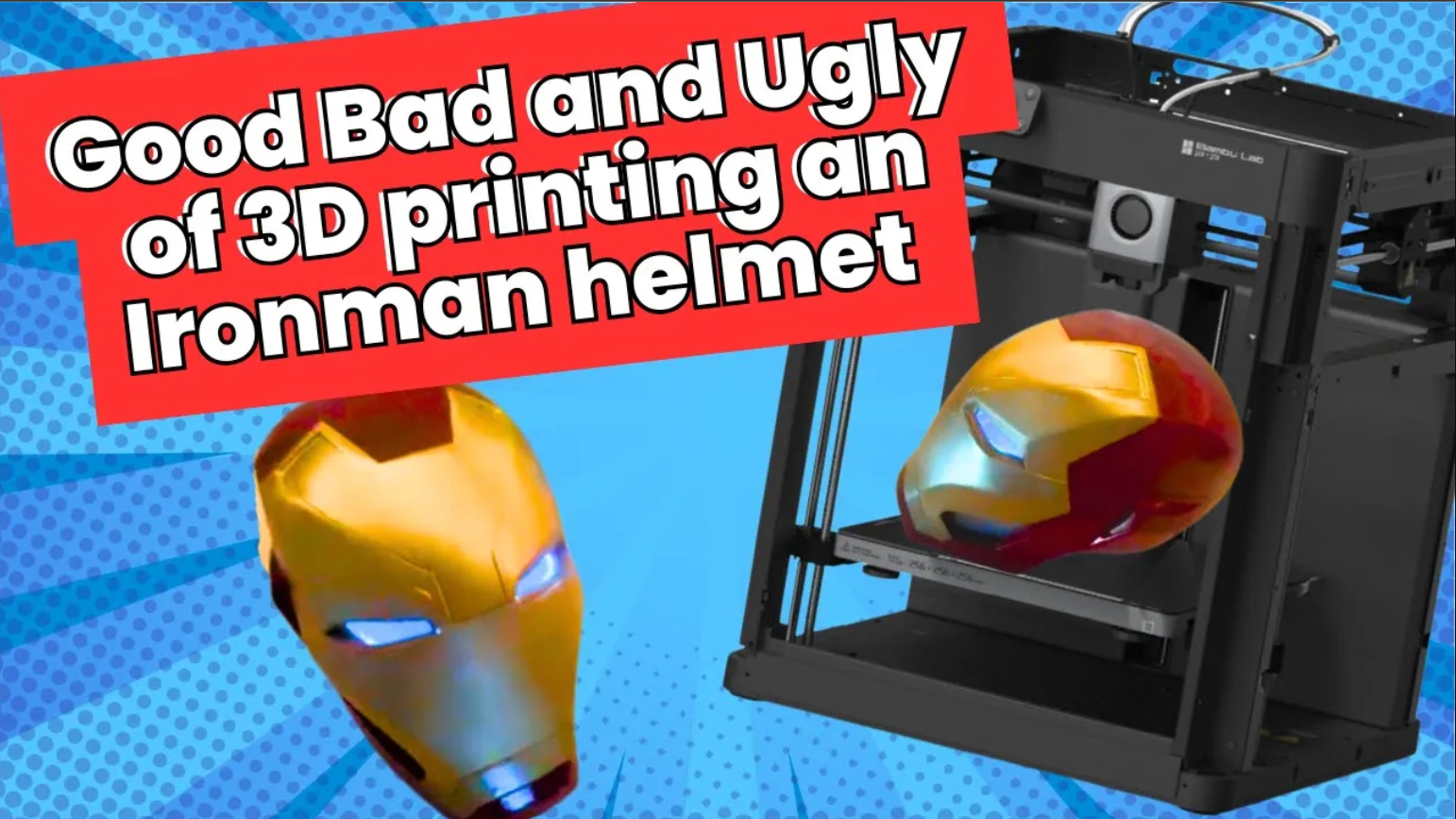
I just wrapped up my second-ever 3D printed helmet project this time, an Iron Man helmet. My first was a Mandalorian helmet, which took me a year to finish (and nearly broke me). But this time, I was on a tight two-week deadline for my dad’s birthday, and I learned a ton along the way.
In this post, I’ll break down what went right, what went wrong, and what I’d do differently next time so you don’t have to make the same mistakes.
🎥 Watch the full build video on YouTube
Picking the Right File
There are plenty of Iron Man helmet STL files online, from free options to highly detailed paid models. I used a file from Budwin, and while the helmet looked great overall, I wish the model included built-in magnet slots for the faceplate.
Without those, I had to hack together a velcro solution, which didn’t look as clean. If you’re looking for files, check out:
- Thingiverse for free community files
- Cults 3D for paid and free models
- My 3D Printing Supplies List for tools I recommend
Printing the Helmet
Unlike my Mandalorian helmet, which I had to slice into six pieces, the Iron Man helmet fit on my printer bed in one go.
I used a Bambu Labs printer, but you could also pull this off with any printer like an Ender 3. If you plan to do a lot of helmets, a large-format printer can save time, but it isn’t essential.
Sanding and Filling
This stage is where the helmet really transforms. I used a method I learned from Juan Makes:
- Sand the print
- Brush on UV resin to fill in the layer lines
- Apply multiple coats of filler primer
- Sand smooth between coats
This process worked way better than my old methods. But I made two mistakes:
- Leaving the helmet outside too long in the Arizona sun warped the plastic.
- Applying resin too thick, which gunked up fine details like the faceplate lines.
If I had scraped out the excess resin before priming, the final result would have been cleaner.
Painting the Helmet
This was my biggest time crunch. I only had one day to paint, and of course, it was windy.
Here’s what I used:
- Black base coat
- Gold coat for accents
- Multiple thin coats of red metal cast (very runny, apply lightly!)
- Polyurethane top coat
Because I rushed, I applied paint too thick and ended up with drips. Lesson learned:
- Always leave yourself more time than you think you need.
- Apply paint in light, even coats.
- Assemble pieces before painting, or glue can damage your paint job.
- Check out my Post-Processing Supplies List
Lessons Learned
- Don’t cut corners on prep work, sanding and filling make the biggest difference.
- Thin coats of paint always win.
- Build in buffer time (especially if you procrastinate).
- Don’t glue painted pieces together.
At the end of the day, this wasn’t a perfect build, but it was done on time and my dad loved it. Sometimes “done is better than perfect,” especially when you’re learning.
Final Thoughts
Building 3D printed helmets isn’t easy, and your first few will probably have flaws. But that’s part of the process. Each build makes you better.
If you’re starting your own 3D printing helmet project, check out these resources:
- My recommended 3D printing filament list
- My DIY project gear list
- Juan Makes on YouTube for pro finishing tips
And of course, you can watch my full build here:
👉 What I Learned From Making My Second 3D Printed Helmet (Iron Man)
Have questions, or want to suggest a project reach out here!
Check out more blogs below!
Affiliate Disclaimer: This blog contains affiliate links. If you click through and make a purchase, I may earn a small commission at no additional cost to you. I only recommend products I personally use and believe add value.